Texas homeowners face unique challenges when it comes to maintaining their home’s appearance. Between intense sunlight, high temperatures, seasonal storms, humidity, and fluctuating weather conditions, exterior and interior paint can wear down faster than many homeowners expect. One of the most common questions property owners ask is: how often should you repaint your home in Texas?
The answer depends on several factors, including the type of surface, the quality of the previous paint job, exposure to the elements, and how much daily wear certain areas experience. While some surfaces may last more than a decade before needing attention, others can begin showing signs of deterioration much sooner.
Understanding when to repaint can help protect your home’s value, improve curb appeal, and prevent costly repairs down the road. In this guide, we’ll explain how often homeowners should repaint their homes in Texas, what warning signs to watch for, and how professional painting can help extend the life of your investment.
How Long Does Exterior Paint Last in Texas?
One of the biggest factors affecting paint longevity is the Texas climate. Strong UV exposure, heavy rain, humidity, and extreme heat can all reduce the lifespan of exterior paint.
While every property is different, homeowners can generally expect the following timelines:
| Exterior Surface | Average Repaint Timeline |
|---|---|
| Wood Siding | 5–7 Years |
| Stucco | 7–10 Years |
| Fiber Cement | 8–12 Years |
| Painted Brick | 10–15 Years |
| Trim & Fascia | 4–7 Years |
If you’ve been wondering how often should you repaint your home in Texas, your home’s exterior materials play a major role in determining the answer.
Homes exposed to direct sunlight throughout the day may require repainting sooner than properties shaded by mature trees. Coastal humidity, seasonal storms, and temperature fluctuations can also accelerate paint deterioration.
How Long Does Interior Paint Last?
Interior paint is protected from weather exposure, but it still experiences wear and tear from everyday life. Foot traffic, furniture movement, cooking residue, moisture, pets, and children can all impact the lifespan of interior paint.
Typical repaint schedules include:
| Interior Area | Average Repaint Timeline |
|---|---|
| Living Rooms | 5–7 Years |
| Dining Rooms | 5–7 Years |
| Bedrooms | 5–8 Years |
| Kitchens | 3–5 Years |
| Bathrooms | 3–5 Years |
| Hallways | 2–4 Years |
Homeowners investing in quality interior painting services often enjoy longer-lasting results thanks to better surface preparation, premium paint products, and professional application techniques.
7 Signs You Need to Repaint Your Home
Even if you don’t remember when your home was last painted, there are several warning signs that indicate it’s time for an update.
1. Fading Colors
Texas sunlight can gradually fade paint over time. Colors that once looked vibrant may begin appearing dull, washed out, or uneven.
2. Peeling or Cracking Paint
Paint should protect your home. When it begins peeling, cracking, or flaking, moisture can penetrate the surface and cause additional damage.
3. Bubbling or Blistering
Bubbles often indicate trapped moisture or poor adhesion. Left untreated, these issues can spread and compromise larger areas.
4. Water Stains
Visible staining around windows, trim, ceilings, or walls may indicate moisture intrusion that requires immediate attention.
5. Mold and Mildew Growth
Dark spots or discoloration can often be signs of mold or mildew. Professional home painting services frequently include surface preparation that helps address these issues before repainting.
6. Scuffs, Marks, and Surface Damage
Interior walls can accumulate scratches, dents, and stains over time, especially in high-traffic areas like hallways, kitchens, and family rooms.
7. Your Home Looks Outdated
Sometimes the paint itself isn’t failing—the color simply no longer matches your home’s style. Updating paint colors is one of the fastest ways to modernize a property and improve its overall appearance.
These are some of the most common signs you need to repaint your home, whether you’re planning an interior refresh or a complete exterior transformation.
Why Texas Weather Shortens Paint Lifespans
Texas weather is one of the primary reasons homeowners frequently ask, how often should you repaint your home in Texas.
Several environmental factors contribute to paint deterioration:
Intense UV Exposure
Direct sunlight breaks down paint pigments over time, causing fading and surface degradation.
High Temperatures
Extended periods of heat can cause paint to expand and contract, leading to cracks and surface stress.
Humidity and Moisture
Humidity can impact adhesion, while moisture intrusion may contribute to peeling and mildew growth.
Storms and Wind
Rain, debris, and severe weather events can accelerate exterior paint wear and create maintenance concerns.
For these reasons, investing in high-quality exterior house painting products and proper preparation is critical for long-term performance.
Can High-Quality Paint Last Longer?
Absolutely.
The lifespan of a paint job depends heavily on the quality of materials used and the preparation process completed before painting begins.
Professional painters typically focus on:
- Surface cleaning
- Repairs and patching
- Proper priming
- Moisture management
- Premium paint products
- Correct application methods
Many homeowners discover that investing in professional painting contractor in Texas services can significantly extend the life of both interior and exterior paint.
Repainting vs Waiting: Which Costs More?
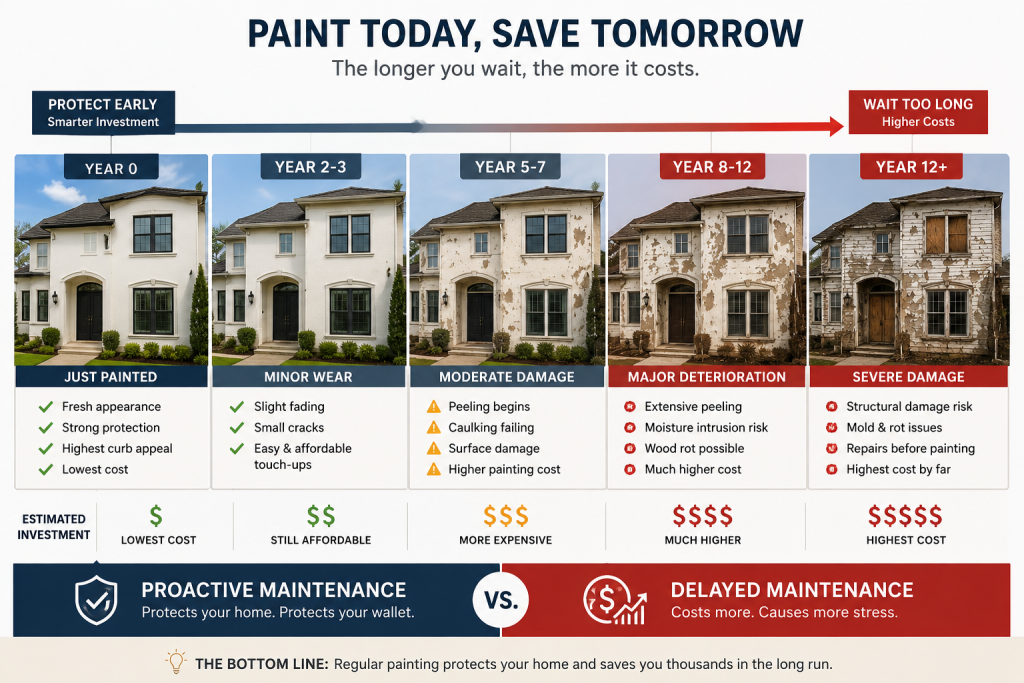
Many homeowners postpone painting projects because they view them as cosmetic upgrades. In reality, delaying necessary repainting can often lead to larger expenses later.
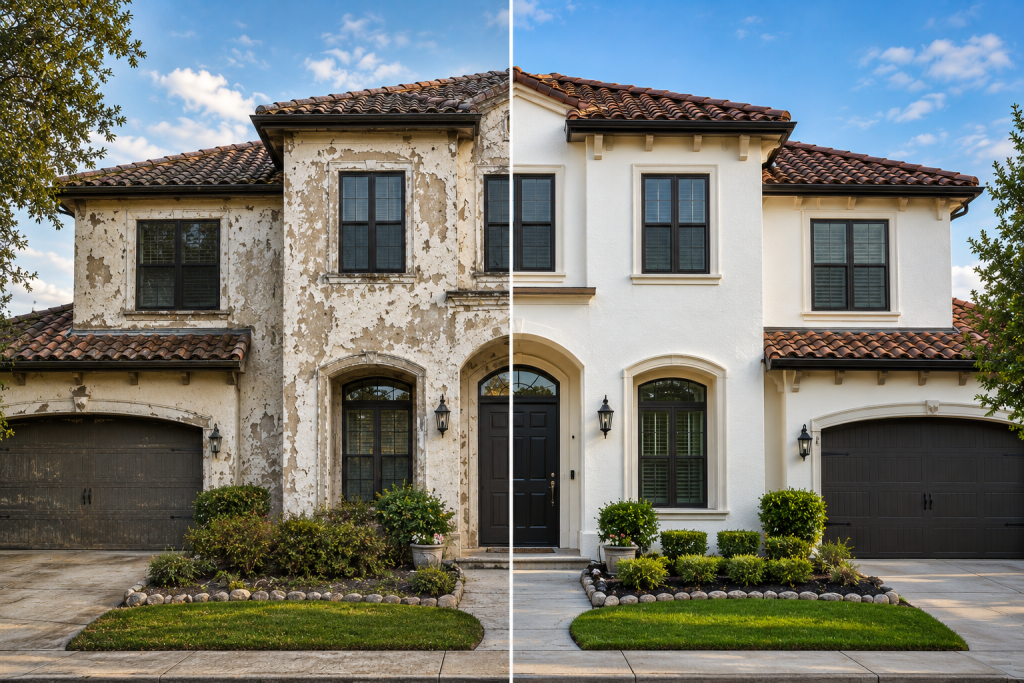
Damaged paint can expose wood, trim, siding, and other materials to moisture and environmental wear. Over time, this may result in rot, mold, repairs, or replacement costs that far exceed the price of repainting.
Protective maintenance is usually more affordable than corrective repairs.
When Should Texas Homeowners Schedule a Painting Project?
For most homeowners asking how often should you repaint your home in Texas, timing can be just as important as frequency.
Spring and fall are often considered ideal seasons for painting projects because temperatures are generally more stable and humidity levels are lower.
These conditions help paint cure properly and create more durable finishes. However, experienced contractors can often complete projects successfully throughout much of the year when weather conditions allow.
Working with an experienced exterior painting contractor can help ensure your project is scheduled at the optimal time.
Protect Your Home With Professional Painting Services
If you’re still wondering how often should you repaint your home in Texas, the best answer is to evaluate your home’s current condition and address issues before they become larger problems.
At Tex Signature, we provide professional interior painting services, exterior house painting, and complete home painting services designed to withstand Texas weather conditions while enhancing the beauty and value of your property.
Whether your home needs a fresh coat of paint, color updates, or a complete exterior transformation, our team can help you choose the right solutions for long-lasting results.
Contact Tex Signature today to schedule a consultation and receive a personalized painting assessment for your home.