Cabinetry is one of the first things you notice when you walk into a kitchen. It establishes the character of the room, influences how the space feels, and determines where almost everything you use every day will live.
That is why choosing custom kitchen cabinets should involve much more than finding a door style or color you love. Beautiful cabinetry should also feel substantial, fit the architecture of the home, use space intelligently, and continue working beautifully years after the renovation is finished.
If you’re considering custom cabinetry for your kitchen remodel, these are the details worth paying attention to before making your decision.
1. Start With How You Actually Use Your Kitchen
Before discussing finishes, think about how you move through your kitchen.
Where do you prepare meals? Where does your family gather? Which appliances do you use every day? What currently ends up sitting on the countertop because there isn’t a practical place to store it?
Great cabinetry responds to those habits.
A family that cooks frequently might prioritize deep drawers near the range, dedicated spice storage, tray dividers, and easy access to cookware. Someone who loves entertaining might benefit from a beverage station, concealed bar cabinetry, or additional storage around the island.
The advantage of custom kitchen cabinets is that the storage can be designed around your life instead of forcing your life into predetermined cabinet sizes.
2. Look Beyond the Cabinet Doors
The door is what you see. The construction behind it is what determines how the cabinetry performs.
Pay attention to the cabinet boxes, drawer construction, shelving, hinges, slides, interior finishes, and how everything is assembled. Drawers should operate smoothly and feel stable when extended. Shelves should support everyday use without feeling lightweight or temporary.
Hardware matters too. Quality hinges and drawer slides may not be the most exciting part of selecting cabinetry, but you’ll interact with them thousands of times.
Premium cabinetry should feel good not only when you look at it, but every time you open it.
3. Choose Materials for Beauty and Everyday Life
There isn’t one material that’s automatically right for every kitchen.
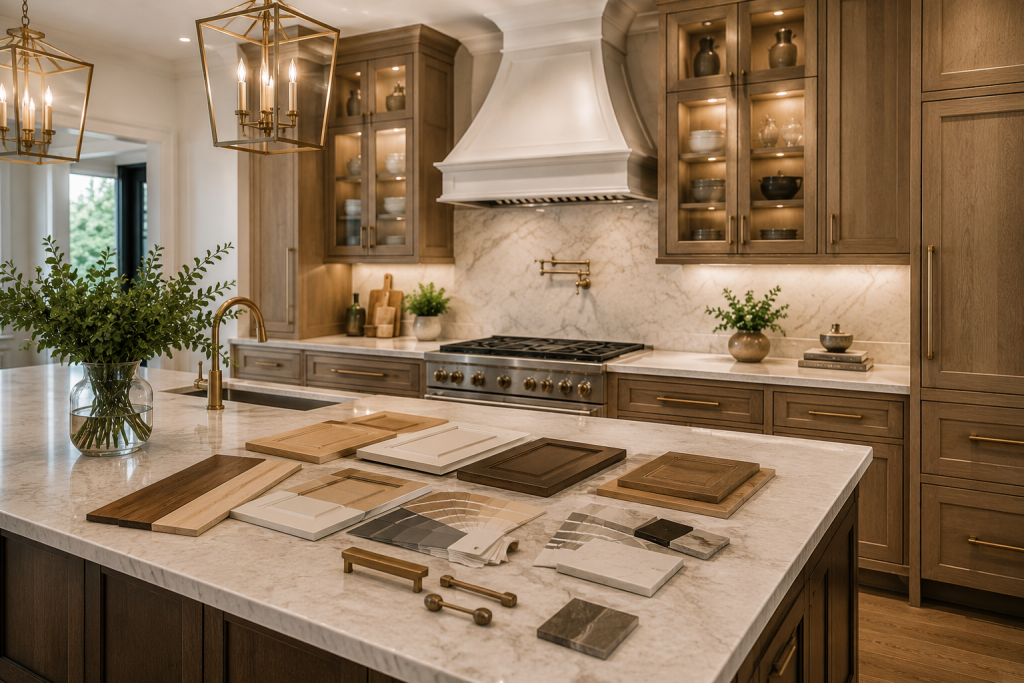
Natural wood can bring warmth, character, and beautiful variation. Painted cabinetry creates enormous design flexibility and can work particularly well in sophisticated traditional and transitional interiors. Other engineered materials may be appropriate depending on the cabinet’s construction and intended use.
The important question isn’t simply:
“Which material is best?” It’s: “Which material is best for this design and the way this kitchen will be used?”
Texas homes also experience heat and humidity, making proper material selection, construction, finishing, and installation especially important for long-term performance.
4. Pay Attention to Proportion and Scale
This is one of the details that separates an ordinary kitchen from one that feels professionally designed.
Cabinetry should relate naturally to ceiling height, windows, appliances, islands, architectural details, and surrounding rooms.
In a kitchen with tall ceilings, stopping cabinetry at an awkward height can leave the room feeling unfinished. Taking cabinets higher, incorporating stacked cabinetry, or using architectural trim can create a much stronger sense of proportion.
The same principle applies to islands. A massive island isn’t automatically luxurious. It needs enough space around it to move comfortably and should be appropriately scaled for the room.
Good design isn’t about making everything bigger.
It’s about making everything feel like it belongs.
5. Make Storage Part of the Design
One of our favorite things about custom kitchen cabinets is the ability to turn storage into part of the architecture.
Instead of filling every available wall with standard cabinets, think about what deserves to be visible and what should disappear.
Small appliances can live behind retractable doors. Trash and recycling can be integrated into pull-outs. Deep drawers can replace difficult-to-access lower cabinets. Pantry storage can be designed around the groceries your family actually buys.
You can even create cabinetry specifically around coffee, baking, entertaining, wine, pet supplies, or whatever matters in your household.
When storage is designed correctly, the kitchen feels calmer because everything has a reason—and a place.
6. Consider Your Appliances Before Finalizing Cabinetry
Appliances and cabinetry need to be planned together.
A professional range, built-in refrigerator, wall oven, microwave drawer, wine refrigerator, or concealed dishwasher can significantly influence cabinet dimensions and surrounding details.
Waiting until cabinetry is finalized to select major appliances can create unnecessary compromises.
Ideally, appliance specifications are incorporated into the design early so cabinetry can be built around exact dimensions and required clearances.
This is particularly important when you’re trying to achieve the clean, integrated appearance associated with high-end kitchens.
7. Think About the Entire Kitchen, Not Individual Samples
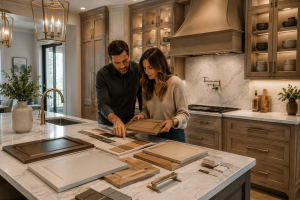
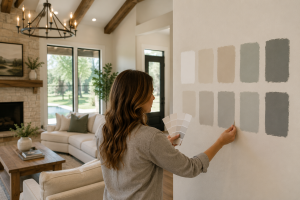
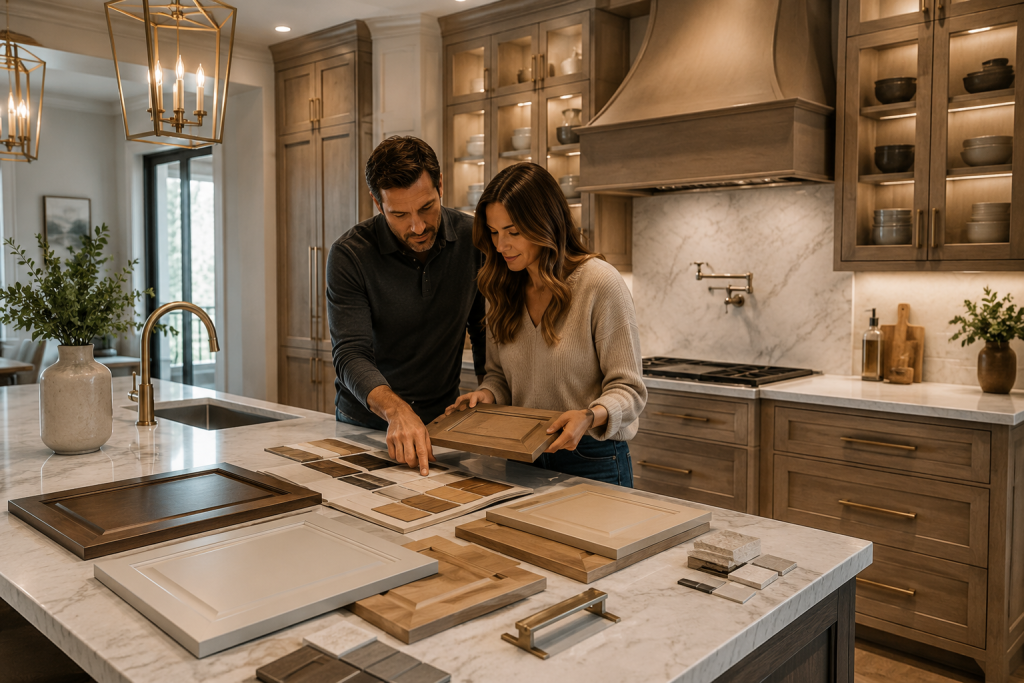
A cabinet sample can look beautiful on a table and completely different once it’s surrounded by flooring, countertops, backsplash, hardware, lighting, and natural light.
That’s why cabinetry shouldn’t be selected in isolation.
A warm oak cabinet paired with natural stone can create an entirely different atmosphere than the same wood paired with a cooler countertop. Painted cabinetry can shift dramatically depending on surrounding colors and the amount of daylight entering the room.
We prefer to think of these materials as a composition.
Some elements can make a statement. Others need to be quieter.
When everything works together, the kitchen feels intentional rather than decorated.
8. Look for Craftsmanship in the Details
Luxury isn’t necessarily about choosing the most expensive material.
Often, you see it in the details.
Consistent reveals between doors. Precise alignment. Thoughtful transitions around appliances. Finished cabinet ends. Well-proportioned trim. Clean installation around walls and ceilings.
These details may seem small individually, but together they determine whether cabinetry feels truly custom.
Before choosing a cabinetry provider, look closely at completed work—not only wide photographs of beautiful kitchens, but the corners, transitions, drawers, interiors, and finishing details.
Craftsmanship becomes much easier to recognize when you know where to look.
9. Don’t Design Only for Today’s Trends
Cabinetry represents a significant portion of a kitchen remodel, so we prefer designs that can age gracefully.
That doesn’t mean your kitchen needs to be conservative.
Color, natural wood, interesting hardware, glass-front cabinetry, dramatic stone, and architectural details can create tremendous personality. The goal is simply to distinguish between something you genuinely love and something you’re choosing because you’ve seen it everywhere for six months.
Your kitchen should feel current when it’s completed, but it should also feel beautiful years from now.
The best custom kitchen cabinets reflect the architecture of the house and the personality of the people living there—not simply the trend of the moment.
Custom vs. Semi-Custom: Does Custom Make Sense?
Not every kitchen automatically requires fully custom cabinetry.
Semi-custom cabinetry can work beautifully when the room has straightforward dimensions and available configurations support the desired layout. It can also help allocate more of the remodeling budget toward other priorities.
Custom cabinetry becomes particularly valuable when the architecture demands unusual dimensions, storage requirements are specific, the kitchen has challenging corners or ceiling conditions, or the homeowner wants a highly integrated design.
The decision should come from what the project needs rather than assuming one option is always superior.
You May Also Find This Helpful 👉 Custom Cabinetry for Luxury Homes: Is It Worth the Investment?
Why Texas Signature Design & Build Takes a Complete Approach to Cabinetry
At Texas Signature Design & Build, cabinetry isn’t something we think about separately from the rest of the room.
We look at how it relates to the architecture, countertops, appliances, lighting, flooring, circulation, storage, and the way our clients want to experience their kitchen every day.
Because our team works across design and construction, those conversations can happen together. That allows us to think through beautiful details while also considering how they’re going to be built and installed.
Texas Signature Design & Build serves homeowners throughout Huntsville, Conroe, The Woodlands, Spring, and surrounding Texas communities, providing custom cabinetry as part of kitchen remodeling, whole-home renovations, custom homes, and design-build projects.
If you’re considering custom kitchen cabinets, we’d love to help you create cabinetry that doesn’t simply fill your kitchen—but feels like it was always meant to be part of your home.