
There is something incredibly exciting about imagining what your home could become. Maybe it’s a kitchen where everyone naturally gathers, a primary bathroom that finally feels peaceful, better storage, more natural light, or simply a layout that makes sense for the way your family actually lives.
But planning your dream home remodel should begin long before anyone starts removing cabinets or opening walls. The most successful remodels start with understanding what you love about your home, what no longer works, and what would genuinely make living there better.
A beautiful remodel isn’t just a collection of beautiful finishes. It’s a series of thoughtful decisions that eventually come together as one cohesive home. Here’s how we recommend approaching the process.
Step 1: Define What You Actually Want to Change
Before thinking about countertops, paint colors, or cabinetry, think about your everyday life.
Where does your home frustrate you? Maybe everyone gathers in the kitchen, but there isn’t enough room around the island. Perhaps your primary bathroom feels cramped, the living room is disconnected from the kitchen, or you have beautiful square footage that simply isn’t being used effectively.
Start by identifying problems rather than solutions.
Instead of saying, “We need a bigger kitchen,” consider why the existing kitchen isn’t working. You may discover that what you really need is better circulation, additional storage, a larger island, or a stronger connection between the kitchen and living areas.
That distinction matters. Good design doesn’t simply make a room larger—it makes the space work better.
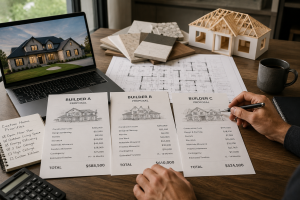
Step 2: Establish a Realistic Remodeling Budget
Budget conversations aren’t the most glamorous part of planning your dream home remodel, but they’re some of the most important.
Your budget influences the project’s scope, materials, cabinetry, appliances, structural changes, and ultimately how ambitious the design can become. Establishing those boundaries early allows the design team to make better decisions instead of creating something beautiful that later needs to be completely reconsidered.
It also helps to separate must-haves from nice-to-haves. Perhaps custom cabinetry and a larger kitchen island are priorities, while replacing flooring throughout the entire house could happen later.
And leave room for the unexpected. Once construction begins, particularly in older homes, conditions can sometimes appear behind walls or underneath floors that weren’t visible during the initial planning process.
Step 3: Decide Where Your Investment Will Have the Biggest Impact

You don’t necessarily need to remodel every room to transform the way your entire home feels.
Sometimes one carefully redesigned area changes everything.
Opening the kitchen toward the living room can completely change how a family interacts. Custom cabinetry can eliminate years of storage frustration. Updating flooring across connected spaces can make an older home suddenly feel cohesive. A thoughtfully designed home addition can provide the space a growing family needs without requiring them to leave a neighborhood they love.
Think about where you spend the most time and which improvements would meaningfully change your everyday experience.
Those spaces should usually receive priority.
👉 You May Also Find This Helpful: Best Home Improvements for Texas Homes
Step 4: Choose Your Remodeling Team Early
One of the biggest mistakes homeowners make is developing an entire vision before involving the people who will actually design and build it.
A Pinterest board is fantastic for communicating style, but a successful renovation also needs to account for structure, plumbing, electrical systems, permits, material availability, construction methods, and budget.
Bringing an experienced remodeling team into the conversation early allows design and construction considerations to develop together.
This is particularly valuable with a design-build approach. Instead of designing something first and discovering construction challenges later, the design can evolve with real-world information about feasibility, materials, budget, and execution.
The result isn’t a less ambitious design. Usually, it’s a better and more buildable one.
Step 5: Develop the Design as a Complete Story
This is where remodeling becomes particularly exciting.
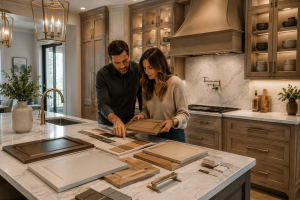
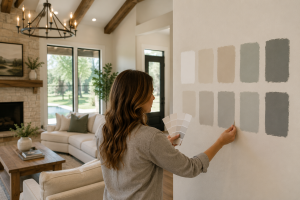
Cabinetry, flooring, countertops, lighting, hardware, paint, tile, plumbing fixtures, architectural details—they shouldn’t feel like independent decisions.
They should feel like they belong together.
When planning your dream home remodel, think about how you want the entire home to feel rather than selecting individual products simply because you like them.
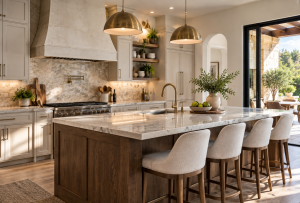
Warm wood cabinetry might influence flooring choices. Natural stone countertops could inspire the color palette. A dramatic kitchen pendant might become the visual anchor that determines how surrounding lighting should feel.
The strongest interiors often have restraint. Not every element needs to compete for attention.
A few beautiful materials, repeated thoughtfully throughout the home, can create far more sophistication than filling every room with a different trend.
Step 6: Make Important Decisions Before Construction Starts
There is a reason experienced remodeling teams want major selections finalized early.
Imagine construction reaching the kitchen and discovering that the range you selected has a long lead time. Or cabinetry installation being delayed because the hardware hasn’t been chosen. One seemingly small decision can affect several trades that come afterward.
Cabinetry, appliances, plumbing fixtures, flooring, tile, countertops, lighting, hardware, and other major finishes should therefore be discussed as early as possible.
Early decisions also give homeowners something incredibly valuable during construction: confidence.
Instead of making expensive choices under pressure, you’re watching a design that you’ve already carefully considered come to life.
Step 7: Understand What the Remodeling Timeline Really Includes
A remodeling timeline doesn’t begin with demolition.
There may be weeks or months of design development, estimating, material selections, engineering, permitting, procurement, and scheduling before physical construction begins.
And that’s a good thing.
The work happening before construction is what allows the construction phase to operate more predictably.
Your actual timeline will depend on the project’s size and complexity. Updating one room is very different from changing a floor plan, relocating plumbing, adding square footage, or completing a whole-home renovation.
Instead of focusing only on “How fast can we start?”, ask a better question:
“What needs to happen before we start so the project runs properly?”
Step 8: Prepare Your Home—and Yourself—for Construction
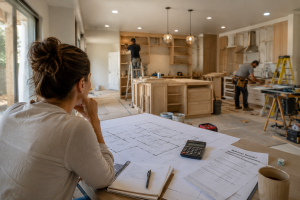
Even a beautifully managed remodel is still construction.
There will be activity, noise, deliveries, workers moving through designated areas, and periods when portions of your home aren’t available.
Planning for that reality makes the experience considerably easier.
For a kitchen remodel, you may want to create a temporary cooking area elsewhere. Families with children or pets should discuss safe access and construction zones before work begins. Larger renovations may require deciding whether remaining in the home throughout construction is practical.
Communication matters here just as much as construction.
You should understand what’s happening, what’s coming next, when important decisions are needed, and who you can contact when questions arise.
Your Home Should Still Feel Like Your Home
One thing we love about remodeling is that the goal isn’t to create a beautiful house that could belong to anyone.
It’s to create your home—only better.
Good remodeling preserves the things you already love while solving the things you don’t. Maybe that’s keeping the character of an older Texas home while creating a modern kitchen. Maybe it’s designing an addition that looks as though it was always part of the original architecture.
Trends can provide inspiration, but they shouldn’t make every decision for you.
When the project is complete, the best compliment isn’t necessarily, “This looks brand new.”
It’s: “This feels exactly like us.”
Why Thoughtful Planning Makes Such a Difference
Ultimately, planning your dream home remodel is about making decisions in the right order.
Goals before finishes.
Budget before scope gets out of control.
Design before demolition.
Selections before they’re urgently needed.
Communication throughout everything.
That preparation doesn’t remove the creativity from remodeling. It gives creativity the structure it needs to become something real.
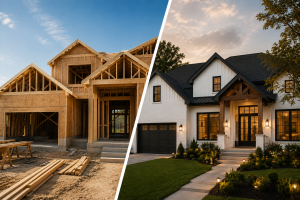
And when architecture, interior design, materials, craftsmanship, and everyday functionality all begin supporting the same vision, that’s when a renovation becomes much more than an update.
It becomes a home you genuinely love living in.
Planning Your Remodel With Texas Signature Design & Build
At Texas Signature Design & Build, this is the part of remodeling we love: taking ideas, inspiration, problems, and possibilities and gradually turning them into a home that feels intentional.
Our design-build approach brings planning, design, permitting, material decisions, and construction together rather than treating them as disconnected stages. It allows the people designing the project and the people responsible for building it to work toward the same vision from the beginning.
We work with homeowners throughout Huntsville, Conroe, The Woodlands, Spring, and surrounding Texas communities, helping with kitchen and bathroom remodeling, whole-home renovations, home additions, custom cabinetry, painting, and larger design-build transformations.
If you’re planning your dream home remodel, you don’t need to arrive with every answer. Bring us the things you love, the things that aren’t working, and the ideas you’ve been saving.
We’ll help you turn them into a plan—and eventually, a home that feels unmistakably yours.