Choosing the right countertop is one of the most important decisions in a kitchen or bathroom remodel. Beyond appearance, your countertops need to handle everyday use, complement your cabinetry, and fit your budget.
When comparing quartz vs. granite countertops, both materials offer durability, attractive finishes, and long-term appeal. However, they differ in maintenance, heat resistance, appearance, and how they perform in busy households.
For homeowners in Huntsville, Conroe, The Woodlands, and surrounding Texas communities, understanding these differences can help make the remodeling process easier.
1. What’s the Difference Between Quartz and Granite?
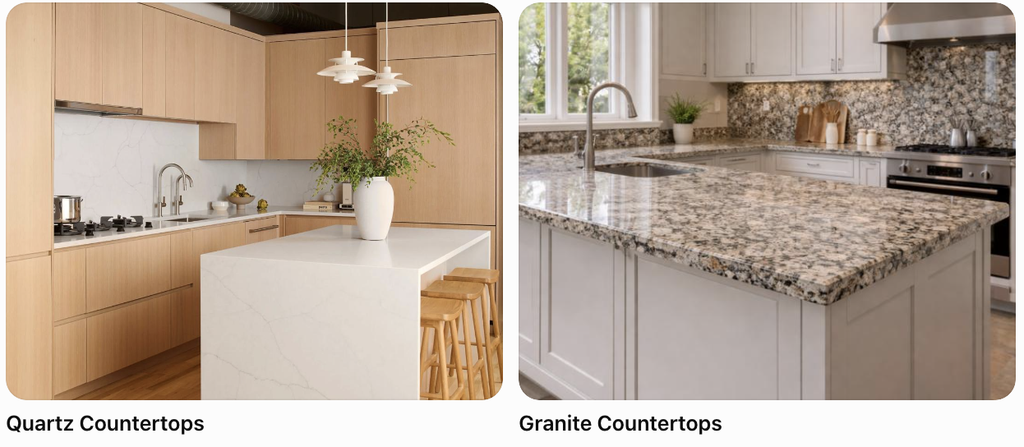
Quartz countertops are engineered surfaces made primarily from crushed quartz minerals combined with resins, pigments, and other materials. This manufacturing process creates a nonporous surface with consistent colors and patterns.
Granite, on the other hand, is a natural stone quarried from the earth and cut into slabs. Each piece has its own mineral patterns, veining, and color variations, giving every installation a unique appearance.
Both materials can work beautifully in residential kitchens, but their differences become more noticeable when considering daily maintenance and design preferences.
2. Which Countertop Is More Durable?
Both quartz and granite are durable enough for everyday kitchen use, but they respond differently to certain conditions.
Quartz is highly resistant to staining and generally doesn’t require sealing. However, its resin components can be damaged by excessive heat, making trivets and heat-resistant pads important.
Granite handles heat better than quartz in many situations, although placing extremely hot cookware directly on any countertop is best avoided. Granite can also require periodic sealing depending on the stone and finish.
Neither material is completely resistant to chips, cracks, or other damage, particularly around edges and corners.
For most homeowners, both can provide years of reliable performance when properly installed and maintained.
3. Quartz vs. Granite Countertops: Which Requires Less Maintenance?
One of the biggest advantages of quartz is its relatively simple maintenance.
Because the surface is nonporous, quartz doesn’t require sealing and can usually be cleaned with mild soap and water. This makes it appealing for busy households that prefer a low-maintenance kitchen.
Granite requires slightly more attention. Depending on the specific slab and its porosity, periodic sealing may be recommended to help protect against stains.
Both materials should be cleaned with products appropriate for the surface, avoiding harsh chemicals or abrasive cleaners that could damage the finish.
If minimal maintenance is your priority, quartz generally has the advantage.
4. Which Looks Better in a Modern Kitchen?
Appearance is where personal preference becomes especially important.
Quartz offers a wide variety of colors and patterns, including designs inspired by marble, concrete, and natural stone. Its consistency makes it particularly attractive for contemporary kitchens with clean lines, large islands, and coordinated cabinetry.
Granite provides natural variation that manufactured surfaces cannot reproduce exactly. Its mineral patterns and unique characteristics can add warmth, texture, and individuality to a kitchen.
For Texas homeowners interested in transitional, traditional, or natural-material interiors, granite can be an excellent choice. Quartz is often preferred for modern and minimalist designs, although both materials can complement many architectural styles.
The best choice is the one that works with your cabinetry, flooring, lighting, and overall home design.
5. Is Quartz More Expensive Than Granite?
The cost of quartz vs. granite countertops depends on several factors, including material quality, slab availability, thickness, fabrication, edge profiles, and installation complexity.
As broad U.S. planning estimates, installed countertop prices can fall within these ranges:
| Material | Approximate installed cost |
|---|---|
| Quartz | $60–$150+ per sq. ft. |
| Granite | $50–$140+ per sq. ft. |
These are illustrative market ranges, not Texas Signature quotes. Actual pricing in Texas can vary substantially depending on the selected slab, supplier, project size, cutouts, and fabrication requirements.
Premium granite can cost more than many quartz options, while certain designer quartz collections can exceed the cost of standard granite.
Instead of choosing based on material alone, compare complete installed estimates for the specific products you’re considering.
6. Which Countertop Adds More Home Value?
Both quartz and granite are generally considered desirable countertop materials, particularly in updated kitchens and bathrooms.
However, neither automatically guarantees a higher resale value.
Buyers tend to consider the overall condition and design of the kitchen, including cabinetry, appliances, lighting, layout, and finishes.
A beautiful countertop installed over outdated cabinetry may have less impact than a well-coordinated kitchen renovation.
For homeowners remodeling with resale in mind, choosing a durable, neutral, and cohesive design is often more important than selecting the most expensive material.
👉 You May Also Find This Helpful: 7 Remodeling Projects That Increase Home Value
7. Which Is Better for a Busy Family Kitchen?
If your kitchen sees frequent cooking, entertaining, and everyday activity, practical performance should influence your decision.
Quartz is a strong option for homeowners who want easy cleaning, stain resistance, and consistent appearance. Its low-maintenance characteristics make it especially convenient for households with children or busy schedules.
Granite may appeal to homeowners who frequently cook and appreciate natural stone, particularly when heat resistance and distinctive patterns are priorities.
Regardless of your choice, proper installation, edge detailing, and daily care matter.
A well-designed kitchen should support how you actually use the space rather than simply look beautiful in photographs.
8. What About Bathroom Countertops?
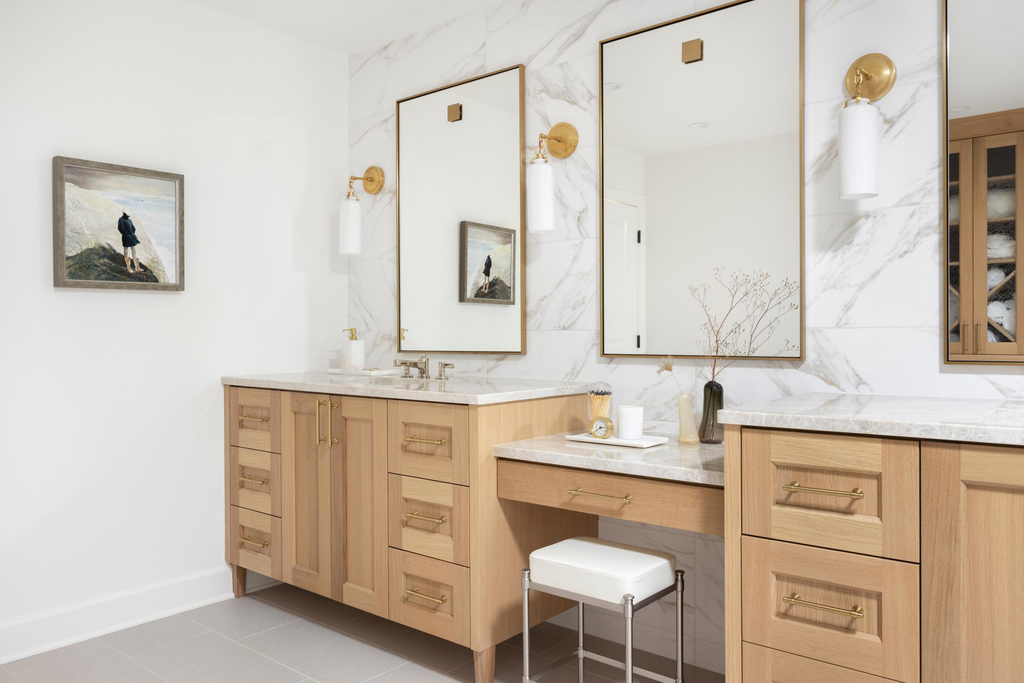
Quartz and granite are also popular options for bathroom vanities.
Quartz is often selected because its nonporous surface is easy to clean and doesn’t require sealing. It also offers consistent finishes that work well with modern vanities and custom cabinetry.
Granite brings natural character to bathrooms and can complement wood cabinetry, stone flooring, and traditional design elements.
In either case, proper installation and care are important, especially around sinks and areas frequently exposed to water and personal care products.
For bathrooms, the decision often comes down to maintenance preferences, design style, and budget.
Quartz vs. Granite: Quick Comparison
| Feature | Quartz | Granite |
|---|---|---|
| Material | Engineered stone | Natural stone |
| Appearance | Consistent patterns | Unique natural variation |
| Maintenance | Low | Low to moderate |
| Sealing | Not required | May be required |
| Heat resistance | Moderate; use trivets | Generally higher; use trivets |
| Stain resistance | High | Varies by stone and sealing |
| Design flexibility | Wide range of finishes | Natural colors and patterns |
| Home value | Attractive to buyers | Attractive to buyers |
Which Countertop Should You Choose?
There’s no universal winner in the quartz vs. granite countertops debate.
Choose quartz if you prefer minimal maintenance, consistent patterns, and a wide range of contemporary finishes. Choose granite if you appreciate natural stone, distinctive patterns, and its generally stronger resistance to heat.
The best countertop should also work with your kitchen layout, cabinetry, backsplash, lighting, and everyday needs.
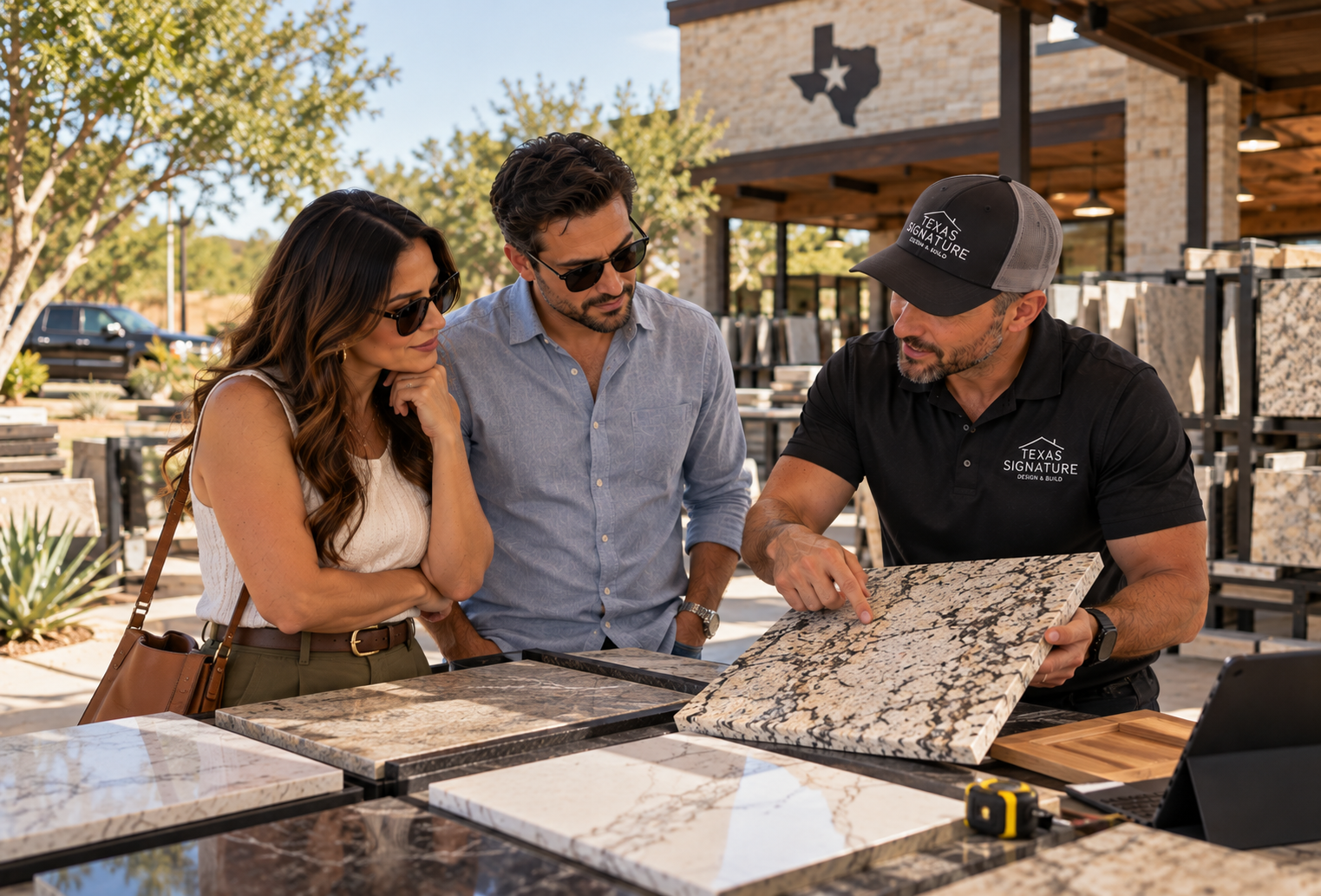
Before making a final decision, view full-size slabs or large samples whenever possible. Small samples don’t always capture the variation or overall appearance of the finished surface.
Kitchen Remodeling With Texas Signature
At Texas Signature Design & Build, we believe the best kitchens bring together thoughtful design, quality materials, and practical functionality.
Our team helps homeowners evaluate countertop materials alongside custom cabinetry, layouts, lighting, flooring, and the other details that make a kitchen work as a complete space.
We provide kitchen remodeling, bathroom renovations, custom cabinetry, and whole-home remodeling throughout Huntsville, Conroe, The Woodlands, Spring, and surrounding Texas communities.
If you’re planning a kitchen renovation and comparing quartz vs. granite countertops, we can help you explore the materials and design options that make sense for your home.
A beautiful countertop is only one part of a great kitchen. The real value comes from how everything works together.