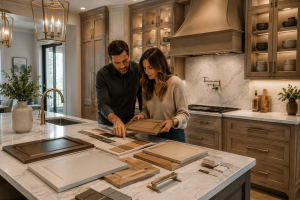

If you’re considering putting significant money into your home, you’ve probably wondered: does remodeling increase property value? In many cases, yes—but the relationship between remodeling cost and resale value isn’t as simple as spending $50,000 and automatically adding $50,000 to the price of your house.
Some improvements can make a home more attractive to future buyers, correct outdated or problematic spaces, and improve its marketability. Others may be incredibly valuable to you personally while recovering only part of their cost when the home is sold. The smartest remodeling decisions consider both sides: how the project improves your life today and how it may influence the home’s value tomorrow.
1. What Types of Renovations Increase Home Value the Most?
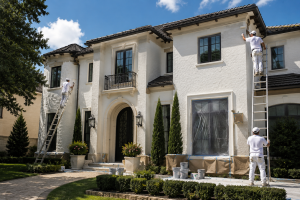
Interestingly, some of the strongest returns don’t necessarily come from the largest renovations. The 2025 Cost vs. Value Report for Houston estimates particularly strong cost recovery for projects such as garage door replacement, manufactured stone veneer, steel entry door replacement, fiber-cement siding, and a minor mid-range kitchen remodel.
That doesn’t mean homeowners should automatically choose those projects. A new garage door won’t solve a dysfunctional kitchen, and new siding won’t create the additional bedroom your family needs. Instead, the data demonstrates an important principle: the amount you spend isn’t what determines the return. Improvements that solve visible problems, improve functionality, or strengthen a home’s overall appeal can sometimes produce disproportionate value.
2. Do Kitchen and Bathroom Remodels Increase Property Value?
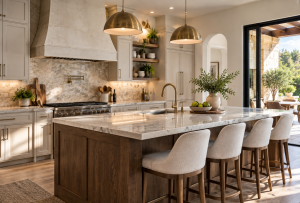
Kitchens and bathrooms remain particularly important because they’re spaces homeowners interact with constantly and buyers notice immediately. NAR’s 2025 Remodeling Impact Report found that REALTORS® had recently seen increased demand for kitchen upgrades and bathroom renovations, alongside new roofing.
Houston’s numbers illustrate why the scope of the remodel matters. A standardized minor mid-range kitchen remodel costing about $28,300 was estimated to produce $30,024 in resale value, or 106.1% cost recovery. A much larger mid-range kitchen remodel costing about $81,521 was estimated at 46.8% recovery. The lesson isn’t that major remodeling is a mistake—it’s that spending more doesn’t automatically produce a proportionally larger resale return.
👉 You May Also Find This Helpful: 12 Kitchen Remodeling Ideas That Add Real Value to Your Home
3. Can I Renovate My Bathroom for $10,000?
This is one of those questions where an online yes-or-no answer can be misleading. A limited cosmetic refresh and a complete bathroom remodel are very different projects. Keeping the existing layout, vanity, plumbing locations, and shower structure while changing selected finishes can require a substantially different investment than rebuilding the entire room.
For context, the 2025 Houston benchmark for a standardized mid-range bathroom remodel was approximately $23,503, while an upscale remodel was approximately $75,005. Your actual cost can fall outside either figure depending on size, existing conditions, labor, cabinetry, tile, plumbing, fixtures and structural work.
👉 You May Also Find This Helpful: How Much Does a Bathroom Remodel Cost in Texas?
4. What Adds the Most Value to a Property?
There’s no single improvement that adds the most value to every house. Location, neighborhood expectations, property condition, square footage, layout and the quality of existing finishes all affect what buyers are willing to pay. A renovation that makes sense for a home in one market may not have the same effect somewhere else.
What often matters is removing the home’s biggest weaknesses. An outdated kitchen, deteriorated exterior, awkward floor plan, insufficient storage, damaged finishes, or an obviously dated bathroom can influence how buyers perceive the entire property. Remodeling strategically means identifying what is holding the home back, rather than simply adding expensive features.
5. What Can Devalue a House the Most?
Deferred maintenance can be particularly damaging because buyers may see one visible problem and begin wondering what else hasn’t been maintained. Water damage, roofing issues, deteriorated exterior materials, poor-quality repairs, outdated systems, and unfinished work can all create concerns that go beyond appearance.
Remodeling can also work against resale when it becomes extremely personalized. Removing functionality that most buyers expect, creating unusual layouts, choosing highly specific permanent finishes, or completing visibly poor-quality construction may narrow the home’s appeal. If resale matters, good design should feel distinctive without making the next owner feel they’ll need to immediately undo the renovation.
6. What Home Improvements Don’t Add Much Resale Value?
Some projects can dramatically improve your enjoyment of a home without returning their full construction cost at resale—and that doesn’t automatically make them poor decisions.
Houston’s 2025 data demonstrates this clearly. An upscale bathroom remodel was estimated to recover about 40.2% of its cost, while an upscale major kitchen remodel was estimated at approximately 33.2%. A backyard patio benchmark came in at approximately 49.1%.
Those numbers shouldn’t be interpreted as reasons not to build those projects. If you’ll use a beautiful primary bathroom, custom kitchen, or outdoor entertaining area for the next 10 years, part of the return is quality of life, not simply the eventual sale price.
7. Does Luxury Remodeling Increase Home Value More Than Mid-Range Remodeling?
Not necessarily. Luxury remodeling gives homeowners opportunities for custom cabinetry, architectural changes, premium materials, integrated appliances, specialty lighting and highly personalized spaces. Those features can be appropriate for the home and neighborhood, but a larger construction budget doesn’t guarantee an equivalent increase in market value.
That’s particularly important when deciding where to spend. Instead of upgrading every material simply because the budget allows it, consider which improvements fundamentally change the experience of the home. A better layout, more natural light, additional storage, quality cabinetry, durable materials and excellent craftsmanship may matter more than choosing the most expensive version of every finish.
👉 You May Also Find This Helpful: Luxury vs. Mid-Range Remodeling: Which Is Right for Your Home?
What Style of Home Has the Highest Resale Value?
There isn’t one architectural style that universally delivers the highest resale value. Real estate is highly local, and buyers in different Texas communities may have different expectations regarding architecture, lot size, layouts, outdoor living and finishes.
For remodeling purposes, we wouldn’t recommend transforming a house simply to chase whatever design style happens to be popular today. A better strategy is usually to respect the architecture of the existing home while improving the elements that feel dated or dysfunctional. Timeless materials, coherent design and good craftsmanship tend to age better than renovations built entirely around short-lived trends.
Remodeling for Property Value vs. Remodeling for Yourself
This may be the most important distinction in the entire conversation. Someone expecting to sell within two years should probably evaluate a renovation differently from someone creating a home they expect to enjoy for another 15 years.
NAR’s 2025 research looks at both sides of remodeling: potential cost recovery and homeowner satisfaction. That distinction matters because financial return isn’t the only reason people renovate. A better kitchen can change how a family cooks and gathers; an addition can prevent the need to move; and a redesigned primary suite can improve everyday comfort even when the construction cost isn’t recovered dollar-for-dollar at resale.
Does Remodeling Increase Property Value in Texas? Start With the Right Project
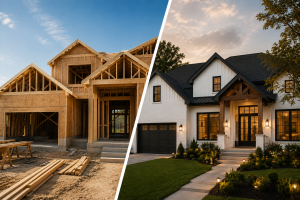
So, does remodeling increase property value? It certainly can, but the best project isn’t necessarily the biggest or most expensive one. The relationship between renovation and resale depends on what you’re changing, the condition of the existing home, construction quality, neighborhood expectations, and how much you’re investing relative to the improvement you’re creating.
At Texas Signature Design & Build, we believe that conversation should happen before construction begins. We help homeowners think through what isn’t working, what should be preserved, where additional investment makes sense, and how design, materials, budget and construction can work together rather than being treated as separate decisions.
For homeowners throughout Huntsville, Conroe, The Woodlands, Spring, and surrounding Texas communities, that may mean a focused kitchen or bathroom renovation, custom cabinetry, an addition, or a larger whole-home transformation.
The goal isn’t simply to spend more money on the house. It’s to make the house better—and make every remodeling dollar as intentional as possible.